Coloring as a Mindfulness Practice: A Beginner's Guide
Curious about coloring as a quiet, present-moment habit? Here's a careful, evidence-aware beginner's guide to starting a mindful coloring session.
What Mindfulness Actually Means
Mindfulness gets used loosely in everyday conversation, so it helps to start with a plain definition. According to NHS Every Mind Matters, mindfulness means "living more in the present moment, appreciating the here and now, and not dwelling too much on the past or future." The guide notes that mindful living can help some people feel calmer and may support better sleep and coping, though it frames this as a general wellbeing practice rather than a guaranteed outcome for any one person.
The techniques described in that same NHS guide are mostly about noticing: the air on your skin, the weight of your feet on the floor, the texture of a banister under your hand. None of them require special equipment. That context is useful for coloring, because coloring is, at its simplest, a structured way to keep noticing something small and physical for an extended stretch of time.
Why Coloring Lends Itself to Present-Moment Attention
A coloring page offers a built-in set of things to notice. The J. Paul Getty Museum's overview of the elements of art breaks visual work into line, shape, space, color, and texture. Every one of those elements shows up on your table while you color.
The Small Decisions That Anchor You
- Line. The Getty resource notes that a line's direction and character lead the eye and can carry a feeling of movement or stillness. Following a curved line slowly with a pencil, rather than rushing across it, is itself a small act of attention.
- Hue, value, and intensity. Deciding whether a petal is pale pink or deep magenta, and how much pressure to use, asks you to make a choice in the present moment instead of on autopilot.
- Texture. Choosing between a flat wash of color and layered, grainier strokes gives your hands something specific to do while your mind settles.
None of this is a claim that coloring produces the same effects as formal mindfulness training or meditation. It simply means the physical, decision-by-decision nature of coloring overlaps with the present-focused noticing the NHS describes.
Starting a Beginner's Coloring Session
You do not need a ritual to begin, but a few small habits make it easier to settle in.
Setting Up a Quiet Corner
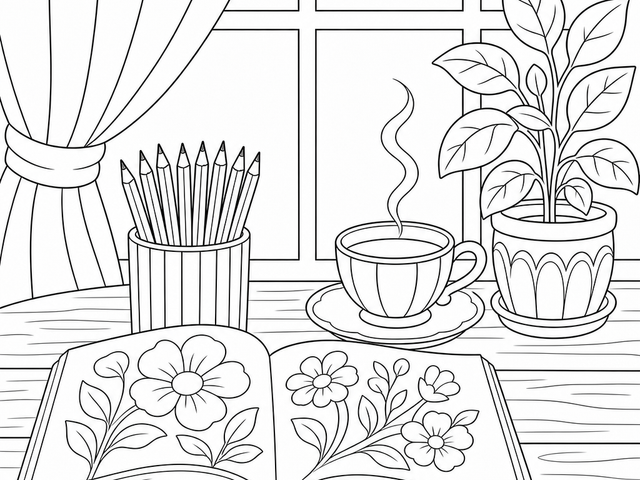
Choose a spot with decent light and few interruptions, with your phone somewhere you cannot see notifications arrive. Ten to fifteen minutes is plenty for a first session. There is no minimum time required to do this correctly.
Choosing Paper and Pencils That Suit Your Hand
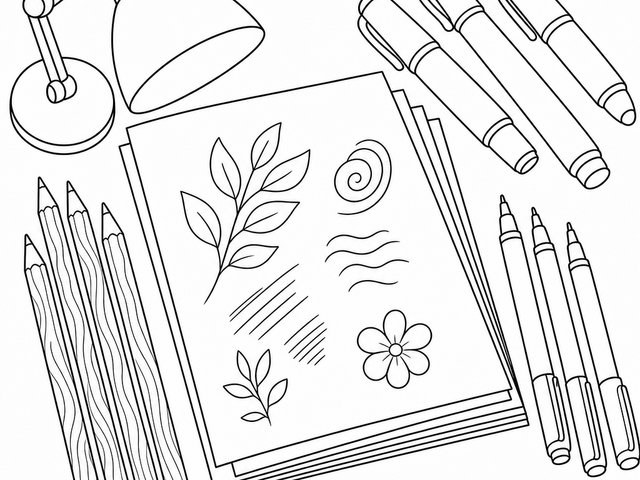
Working colored pencil artists interviewed by Legion Paper describe testing different papers for how many layers they can hold and how much tooth they prefer under the pencil tip, and they are candid that "there's no substitute for experimenting yourself." That advice holds for a beginner coloring page too. A page with visible texture will grip pigment differently than a smooth page, and neither choice is objectively correct. Spend a few minutes testing pressure and layering in a corner of the page before committing to a final look.
A short starting checklist:
- Pick one page you find genuinely appealing, not one you feel obligated to finish
- Test two or three pencils in a scrap corner to see how the paper takes color
- Decide on one small area to start with instead of planning the whole piece
- Keep the session short enough that you want to return to it
Practicing the Three Cs While You Color
The NHS outlines three Cs of mindfulness: curiosity, compassion, and a calm centre. They translate naturally to a coloring session.
- Curiosity. Instead of deciding in advance exactly how a design should look, stay curious about what happens when two colors sit next to each other, or when you switch from light to heavy pressure partway through a shape.
- Compassion. If a line wobbles outside the edge or a color choice does not work the way you hoped, the NHS suggests meeting setbacks with phrases like "I'm doing my best" rather than harsh judgment. A coloring page is a low-stakes place to practice that habit.
- Calm centre. Stepping back to look at the whole page every so often, rather than staying fixed on one tiny section, can help you feel less tangled up in any single mistake.
What Coloring Is and Isn't
It is worth being plain about the limits here. The American Art Therapy Association distinguishes recreational coloring from art therapy, which is a mental-health profession delivered by a credentialed clinician within a therapeutic relationship. The association has pushed back specifically on products and workshops that borrow the term "art therapy" to describe coloring books, while noting that it does not discourage coloring for recreation and self-care.
Coloring can be a self-care activity, but it is not art therapy or a substitute for mental-health care. If you are managing a diagnosed mental-health condition, coloring is best treated as one small, pleasant addition to your routine rather than a treatment in itself.
A Note on Caring for Your Finished Pages
If a page turns into something you want to keep, you do not need museum-level conservation to look after it. But a few habits echoed in the Library of Congress's guidance on paper care are easy to borrow: handle pages with clean, dry hands, keep finished work out of direct sunlight, and store completed pages flat rather than folded. The Library of Congress writes these standards for archival collections, not for a page you might give to a friend or pin on a corkboard, but the basic logic, less light and less handling meaning less fading, holds up at any scale.
Keep Coloring, One Page at a Time
Mindfulness, as the NHS describes it, tends to become more natural with repetition rather than through a single perfect session. The same seems true of coloring as a quiet habit: a few unhurried minutes with a pencil and a page you like, repeated now and then, is a reasonable way to build a small pause into an otherwise busy day. Pick a page that appeals to you, give yourself permission to work slowly, and notice what you catch this time that you missed the last. That is really all a beginner's practice needs to be. When you are ready, pick out a page from Coloring Habitat and let the next few minutes be unhurried.