Preventing Marker Bleed-Through on Printable Coloring Pages
A practical routine for stopping marker bleed-through on printable pages, with paper tests, backing tricks, and gentler layering habits.
Why Markers Bleed Through Printer Paper
If you have ever lifted a freshly colored printable page to find a ghostly double of your drawing soaked into the sheet underneath, you already know the frustration. Most bleed-through comes down to a simple mismatch: standard printer paper is thin and absorbent, while markers (especially alcohol-based ones) carry a lot of fluid. The ink needs somewhere to go, and if the paper fibers cannot hold it, it travels straight through to whatever is beneath.
This is not a flaw in your coloring. It is a paper problem, and paper problems have paper solutions. The good news is that a few small changes to your setup, rather than a total overhaul of your supplies, usually solve most of it.
The Two Culprits: Paper and Ink Load
Bleed-through generally comes from two directions at once:
- Paper weight and texture. Lightweight copy paper (usually 20lb/75gsm) has very little tooth or thickness to absorb ink before it saturates.
- How much ink you lay down. Heavy layering, slow circular strokes, or going over the same area repeatedly all add more fluid than lighter paper can hold.
Addressing both sides gives you the most reliable results.
Choosing Paper That Can Handle Markers
Working artists who use heavily saturating media talk a lot about paper "tooth," meaning the texture of the surface, and how many layers a sheet can take before it gives out. Colored pencil artists interviewed in Legion Paper's guide to choosing paper for colored pencil art describe testing surfaces specifically for how much layering they can absorb before becoming oversaturated, and they consistently recommend making a small test swatch before committing to a full piece. Markers behave differently from pencil, but the underlying lesson transfers well: texture and weight are worth testing with your specific tool before you color an entire page, rather than assuming one paper suits every marker.
Texture itself is one of the foundational elements of visual art, alongside line, shape, space, and color, and it genuinely changes how a medium sits on a surface, as the Getty Museum's overview of formal analysis and the elements of art explains. A smoother, denser sheet will behave differently under marker than a toothy, absorbent one, so there is no single "correct" paper, only one that suits what you are coloring with.
What to Look For When Printing
- Heavier stock. If your printer accepts it, switch from standard 20lb paper to a 32lb or cardstock-weight sheet for marker projects.
- Marker-friendly or mixed-media printables. Some coloring page sources specifically note paper weight recommendations; heavier stock is usually marked as such.
- A quick swatch test. Before coloring the real page, scribble a few strokes of your most-used markers in a corner of the printed sheet (or a spare test print) and check the back after a minute.
Building a Simple Blotter System
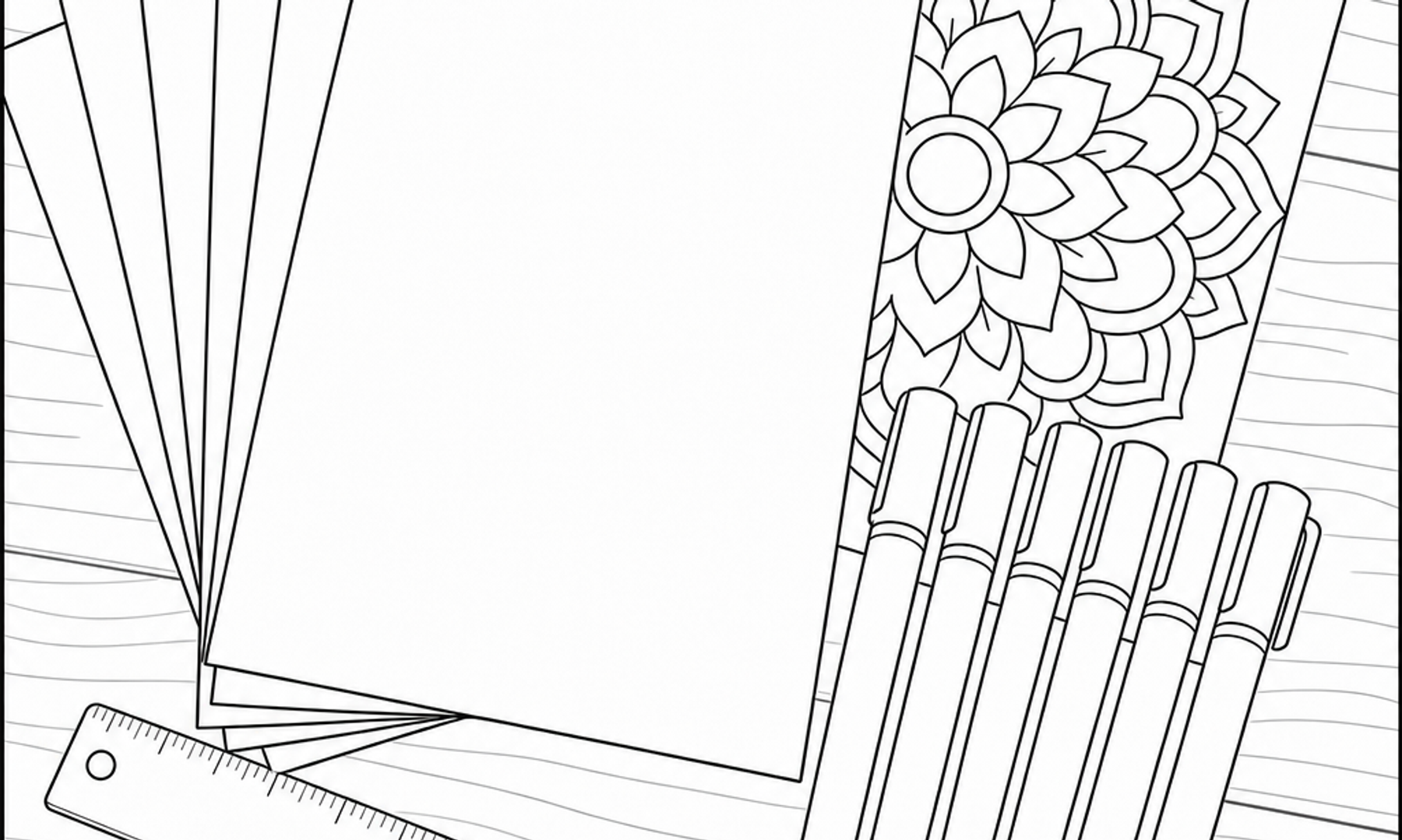
Even good paper benefits from a backing layer, and this is the single most useful habit for marker coloring. Slide one or two sheets of plain printer paper, cardstock, or even a few paper towels underneath your coloring page before you start. This "blotter" catches whatever does soak through, protecting your table, the next page in a stack, or the page below in a bound book.
A few backing options, roughly from lightest to most protective:
- A single sheet of scrap paper (catches light bleed, cheap and fast)
- A stack of 3 to 4 sheets of scrap paper (better for heavier alcohol markers)
- A dedicated piece of cardstock or a cutting mat (reusable, wipes clean)
- A sheet of freezer paper, shiny side down (creates a barrier that keeps ink from soaking into the surface below)
If you print your pages one at a time rather than in a full booklet, this backing system is especially easy to maintain: swap in a fresh blotter sheet whenever the old one gets saturated.
Marker Technique That Keeps Bleed in Check
Technique matters as much as materials. A few small adjustments in how you apply color can meaningfully reduce how much ink the paper has to absorb.
Pacing and Pressure
- Let layers dry between passes. Going back over a still-wet area adds fluid before the first layer has had a chance to set.
- Use lighter pressure on broad areas. A light touch deposits less ink per pass, which you can build up gradually if you want more saturation.
- Work in smaller sections. Coloring a large area in one continuous motion tends to pool more ink than coloring it in patches and blending.
Choosing Markers Thoughtfully
- Water-based markers generally bleed less than alcohol-based ones, simply because they carry less solvent.
- Fine or brush tips let you control ink flow more precisely than broad chisel tips, which is useful for detailed printable designs with thin lines.
- If a design has small, intricate areas, consider outlining with a fine marker and filling larger spaces with colored pencil instead, which sidesteps the bleed question entirely for those sections.
Caring for Finished Pages
Once a page is colored, how you handle and store it affects how well it holds up. The Library of Congress's guidance on caring for works on paper, written for archival materials but useful as a general reference, recommends keeping paper flat or properly supported, away from direct light, food, and moisture, and storing acidic papers separately from other sheets so that acids do not migrate between them over time. Your coloring pages are not museum pieces, but the same basic habits, a clean dry surface, flat storage, and avoiding direct sun, will keep the colors looking fresh for longer.
A Simple After-Coloring Checklist
- Let marker ink dry fully (a few minutes) before stacking pages
- Store finished pages flat in a folder or box rather than folded
- Keep them out of direct sunlight, which can shift color over time
- Separate especially acidic papers from pages you want to keep long-term
A Quiet Routine Worth Keeping
Much of the pleasure in coloring comes from small, repeatable habits: the same lamp, the same chair, a familiar stack of markers arranged in order. Paying close attention to the paper under your hand, the texture, the way ink spreads, is itself a form of noticing the present moment rather than rushing through it, which is part of what the NHS's mindfulness guidance describes as paying attention to simple physical sensations around you. That said, it's worth being clear about what this kind of quiet, repeatable coloring practice is and is not. The American Art Therapy Association's overview of the art therapy profession explains that art therapy is a credentialed mental health profession practiced by trained clinicians, distinct from recreational activities like coloring. Coloring can be a self-care activity, but it is not art therapy or a substitute for mental-health care.
A reliable backing system and a slightly heavier sheet of paper will solve most bleed-through problems without changing anything about how you enjoy your markers. Test a corner, set up your blotter, and let the rest of your routine stay exactly as unhurried as you like it. Pull out your favorite printable, give the paper a fair chance, and enjoy the color.