How to Restart a Coloring Page You Abandoned Months Ago
Stuck with an unfinished art pile? Here's a practical, pressure-free guide to looking at an old coloring page again and finding your way back in.
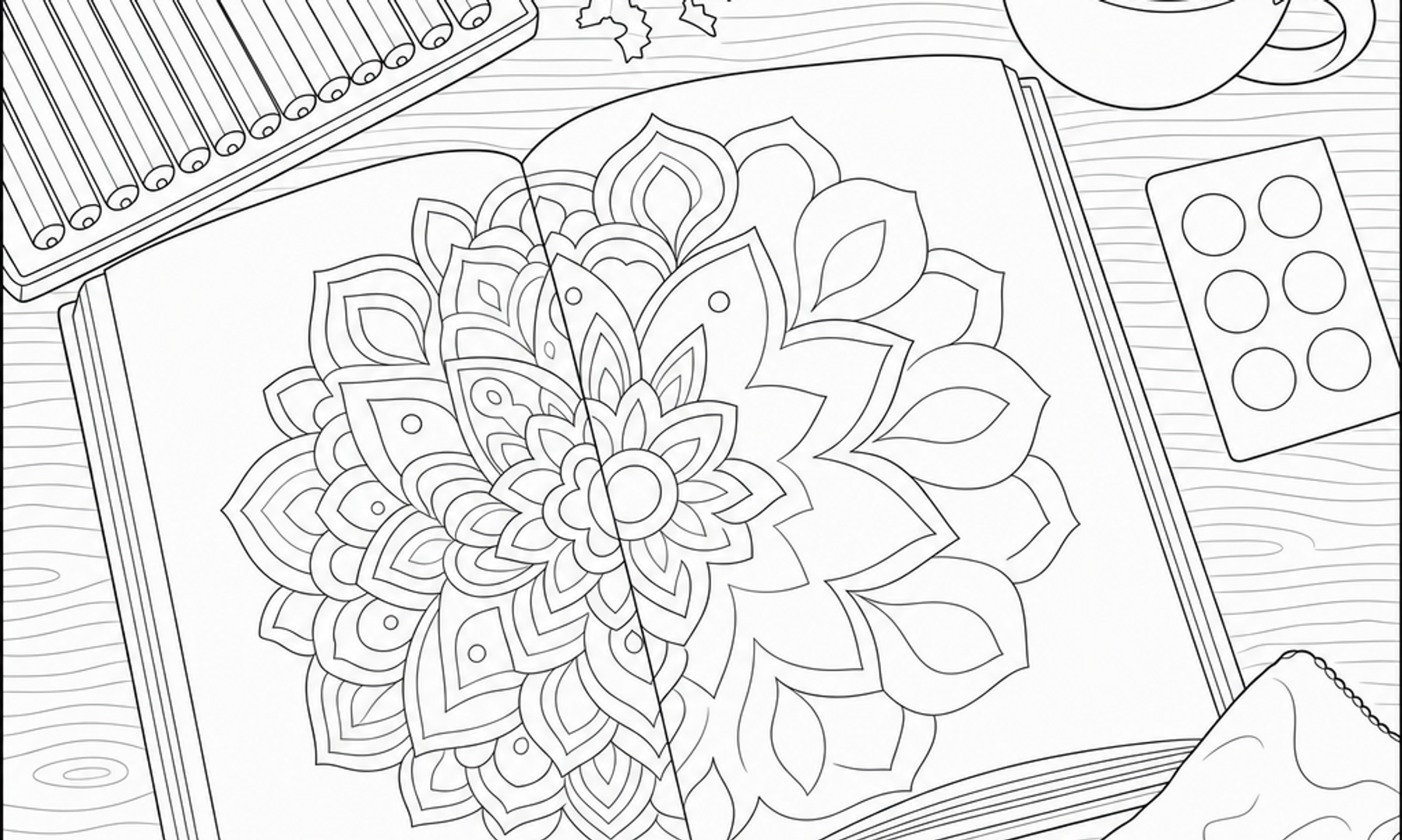
Almost everyone who colors regularly has a small stack of pages that stalled partway through. Maybe the colors stopped working together, maybe life got busy, maybe the page just sat in a drawer until it felt like a stranger's project instead of your own. None of that means the page is ruined. It usually just means you need a plan for looking at it again.
This guide walks through a calm, practical way to pick an unfinished piece back up, work through a creative block, and either finish the coloring page or decide thoughtfully to let it rest.
Why Coloring Pages Get Abandoned in the First Place
Before troubling yourself over a half-colored page, it helps to name why it stalled. Usually it's one of a few familiar things:
- A color choice early on that no longer feels right next to the colors added later
- A section that required more patience or precision than you had that day
- Simple interruption, nothing dramatic, just time running out
- A shift in mood that made the page's palette or subject feel mismatched to how you're feeling now
Naming the reason matters because it tells you what kind of restart you need. A page abandoned over color regret needs a different approach than one abandoned because of a tricky detail section or a plain lack of time.
A Quick, Honest Check-In
Before touching pencil to paper, look at the page for a minute without coloring anything. Notice what's already there: which areas have heavy pressure, which are light, where the line work is dense or sparse. The Getty Museum's guide to formal analysis describes color through hue, value and intensity, and line through its direction and weight (Getty Museum, Understanding Formal Analysis). Looking at your unfinished art through that lens, rather than through a lens of "good" or "bad," tends to lower the pressure of restarting. You're observing a composition, not grading an attempt.
Getting Reacquainted With an Unfinished Page
Once you've looked without judgment, a few small, practical steps can bring the page back into reach.
1. Rebuild the Color Story
If part of the block is color-related, make a small test chart on scrap paper using the same pencils, pens, or markers you already used on the page. The Legion Paper guide on colored pencil work notes that colors can look different from one paper to the next, and several working colored pencil artists recommend building a reference chart before committing to more layers (Legion Paper, Choosing a Paper for Colored Pencil Art). Doing this on your abandoned page lets you see, without risk, whether your original colors still make sense together or whether a small shift (a cooler shadow tone, a slightly duller accent) would bring the piece back into balance.
2. Match Your Tools to What's Already There
If the page was started with one tool and you're tempted to switch to another, test compatibility first. Heavy wax-based pencil layers can resist new pencil on top; a page started with light pencil work generally welcomes more layers without much fuss. According to artists interviewed by Legion Paper, paper texture and how many layers it can hold vary by brand and weight, which is part of why they suggest testing on a scrap first rather than assuming any combination will behave the same way (Legion Paper). If your coloring page is on thinner stock than the museum board or Stonehenge paper described in that piece, it's worth testing a small corner before working back into a dense area.
3. Start With the Easiest Section, Not the Stalled One
It's tempting to go straight back to the exact spot where you stopped, especially if that's the part bothering you. But picking an easier, lower-stakes area first, a border, a background corner, a simple shape, lets your hand and eye warm back up without the pressure of "fixing" the hard part immediately. Momentum from an easy section often makes the harder one feel more approachable afterward.
Working Through the Specific Block
If the stall point really was a creative block rather than a simple interruption, a few structural choices can help.
- Change your line of focus, not your intention. The Getty's elements-of-art material discusses how horizontal lines suggest rest, diagonal lines suggest movement, and curves can soften a composition (Getty Museum). If a section feels stuck, try shading it in a direction you haven't used elsewhere on the page. A small shift in stroke direction can make a flat area feel resolved without requiring a whole new color plan.
- Separate positive and negative space in your mind. Decide, section by section, what counts as the "subject" and what counts as background, and commit to treating them differently in value or intensity. This can simplify decisions that otherwise feel open-ended.
- Work in short, timed sessions. Ten or fifteen minutes is often enough to move a stalled page forward without reintroducing the fatigue that caused the stall in the first place.
When to Let a Page Rest Instead
Sometimes the kindest option is to set the page aside again, deliberately this time, rather than forcing a finish. There is no rule that every coloring page needs completing. If a page no longer interests you, it's reasonable to move on and return to it later, or not at all.
Protecting Unfinished Work Between Sessions
If you're setting a page aside, even briefly, basic paper care helps it stay in good condition for whenever you come back. The Library of Congress's guidance on handling and storing works on paper, written for general paper collections rather than casual coloring pages specifically, recommends keeping paper flat or rolled (not folded), away from direct light, and in a cool, dry spot, and suggests avoiding paper clips, tape, or rubber bands directly on the sheet (Library of Congress, Care, Handling and Storage of Works on Paper). You don't need conservation-grade supplies for a coloring page, but a flat folder or a smooth-surfaced book works well as an interim home.
A Word on Why This Feels Good to Finish (or Not)
Returning to something unfinished can feel satisfying partly because it brings your attention back to the present task instead of to whatever pulled you away the first time. The NHS's guide to mindfulness describes this kind of present-moment attention, noticing texture, color, and the physical sensations of an activity, as one way people try to feel calmer (NHS Every Mind Matters, What is Mindfulness?). We're not suggesting that finishing a coloring page is a mindfulness practice on its own, only that paying attention to color, line, and texture as you work is a reasonable way to spend a quiet stretch of time.
Coloring can be a self-care activity, but it is not art therapy or a substitute for mental-health care.
Bringing It Back Together
An abandoned coloring page isn't a failure, it's just a project that paused. A short color test, a check on how your tools interact with the paper already in place, a warm-up section before the hard part, and reasonable storage in between sessions are usually enough to make a restart feel manageable rather than daunting.
If you're holding onto a stalled page right now, consider pulling it back out this week, not to finish it in one sitting, but just to look at it with fresh eyes. Add a little color to the easiest corner. See how it feels. That's often all it takes to turn an abandoned page back into a page in progress, and Coloring Habitat will be here with new pages whenever you're ready for something to start fresh alongside it.