Coloring and Art Therapy: Why the Difference Matters
Coloring is a wonderful self-care habit, but it isn't art therapy. Here's the honest, evidence-aware distinction and why it matters.
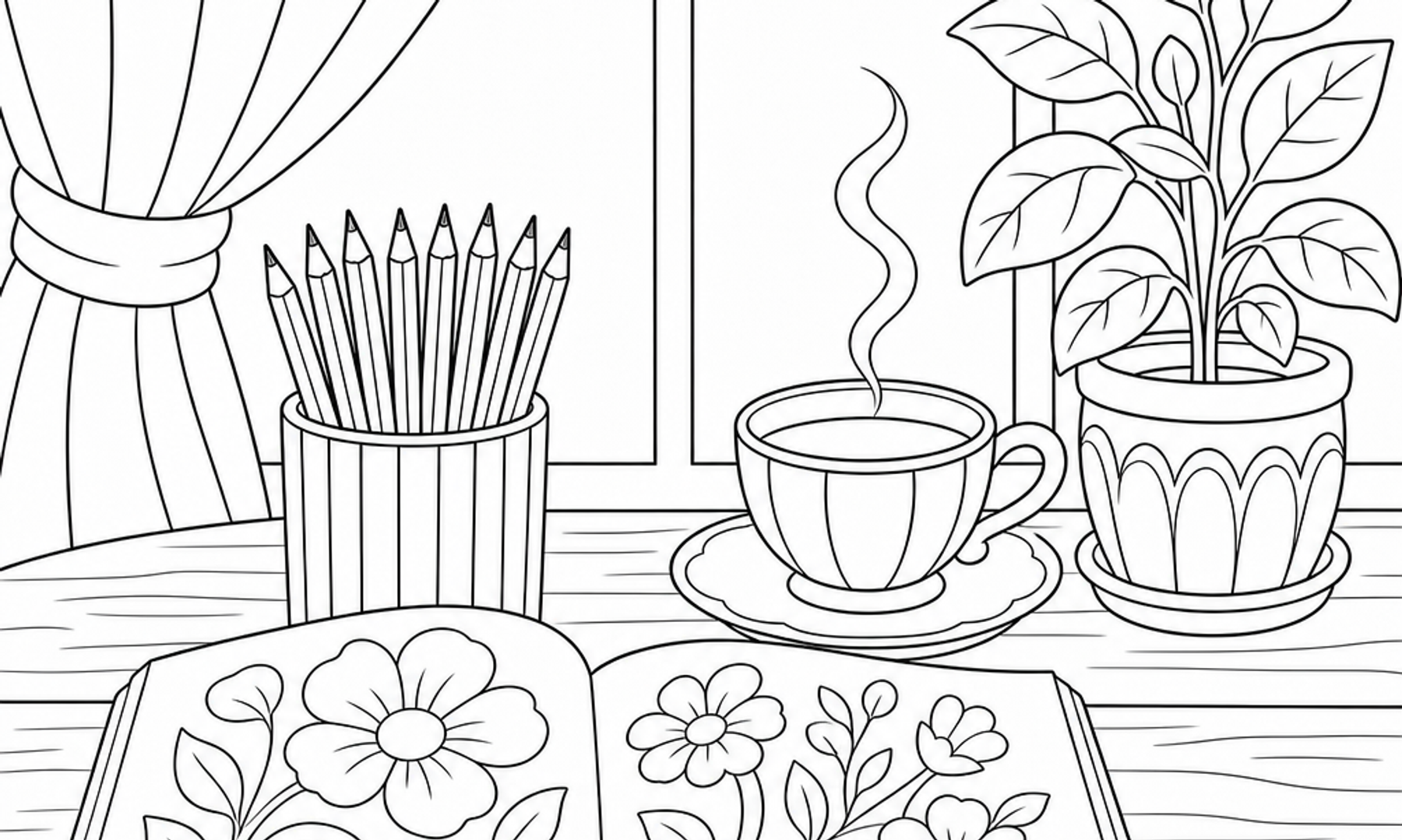
Pick up a coloring book, a handful of pencils, and a quiet half hour, and something genuinely good tends to happen. Your shoulders drop a little. Your attention narrows to a line, a color choice, a small decision about where to press harder and where to let the pigment stay light. We love this about coloring, and we think it deserves to be taken seriously on its own terms, which is exactly why we want to be precise about what it is and isn't.
Over the past decade, "art therapy" has become a loose, friendly phrase attached to all sorts of things: coloring books, craft kits, weekend workshops, even apps. It sounds official. It sounds like it has the backing of research behind it. But the term has a specific, protected meaning, and conflating it with recreational coloring does a disservice to both the credentialed professionals who practice art therapy and the people who color simply because it feels good.
What Art Therapy Actually Is
According to the American Art Therapy Association (AATA), art therapy is "a mental health profession that enriches the lives of individuals, families, and communities through active art-making, creative process, applied psychological theory, and human experience within a psychotherapeutic relationship" (arttherapy.org). That's a precise definition, and every part of it matters.
Art therapists are clinicians with master's-level or higher degrees, trained in both art and therapeutic practice. They work within a psychotherapeutic relationship, meaning there is a trained professional guiding a client toward specific treatment goals, often in clinical or community settings such as hospitals, schools, veterans' clinics, psychiatric facilities, and private practice (arttherapy.org). The work is credentialed, supervised, and ethically regulated. It is not a product you buy or a technique you pick up from a video.
The AATA has been direct about where coloring books fit into this picture. Their own statement says plainly: "While the AATA does not discourage the use of coloring books for recreation and self-care, coloring activities must be distinguished from art therapy services provided by a credentialed art therapist" (arttherapy.org). They go further, noting that products marketed as "art therapy coloring books" are an example of the term being used inaccurately, since art therapy can only be practiced by someone with the required training, certification, and licensure.
This isn't a semantic quibble. If someone is navigating a genuine mental health concern, calling a coloring habit "art therapy" could create a false impression that a recreational activity is equivalent to, or a replacement for, clinical care. That's a real risk worth naming clearly, which is why we want to say it outright: Coloring can be a self-care activity, but it is not art therapy or a substitute for mental-health care.
What Coloring Can Reasonably Offer
None of this means coloring is a lesser activity. It simply means we should describe it accurately, as a quiet, accessible creative habit rather than a clinical intervention.
One useful lens comes from mindfulness guidance, not as a claim that coloring is a validated mindfulness treatment, but as a way of understanding why the activity might feel calming to many people. The NHS describes mindfulness as being "more in the present moment, appreciating the here and now," often practiced by paying close attention to texture, color, and the physical sensations of an activity (nhs.uk). Coloring naturally invites that kind of attention: the pressure of the pencil, the grain of the paper, the small decision about which shade comes next. Whether or not it counts as a formal mindfulness practice for any individual is something each person will experience differently. We'd rather describe the plausible mechanism honestly than overstate it as proven therapy.
A Habit, Not a Treatment Plan
Think of coloring the way you might think of a walk around the block or a cup of tea made slowly: a small, repeatable ritual that can create a pleasant pause in the day. It asks very little of you. There's no performance, no right answer, no session notes. That low-stakes quality is part of its appeal, and it's also exactly why it doesn't map onto the structured, goal-directed, clinically supervised work that art therapy involves.
Borrowing the Language of Visual Art, Without the Clinical Claims
One area where coloring genuinely overlaps with the broader world of art is in its vocabulary. The Getty Museum's education materials describe the foundational elements of art, including line, color, and texture, as "the building blocks used to create a work of art," with color itself broken into hue, value, and intensity (getty.edu). Understanding these terms can make coloring more satisfying, not because it transforms the activity into therapy, but because it gives you a vocabulary for the choices you're already making.
A few ways to use this vocabulary at the table:
- Think in value before hue. Before choosing a color family, decide where you want the darkest and lightest areas of the page to sit. This creates visual depth regardless of which colors you ultimately pick.
- Use intensity deliberately. A muted, grayed-down palette creates a calmer mood; saturated, undiluted colors create energy. Neither is correct, but noticing the difference gives you more control.
- Let line guide the eye. The Getty notes that horizontal lines suggest rest, while diagonals suggest movement. Pay attention to the linework already present in your coloring page and let it inform where you add weight or detail.
Practical Habits for a Better Coloring Session
A little bit of care around materials and setup can make coloring more enjoyable, without needing to borrow therapeutic language to justify it.
- Test your paper with your actual pencils. Colored pencil artists interviewed by Legion Paper describe looking for a surface that is "toothy without being heavily textured" so it can hold multiple layers of pigment without flaking or becoming oversaturated (legionpaper.com). Their advice is about personal preference, not a universal rule, so it's worth testing a scrap before committing to a full page.
- Build color gradually. Several artists mentioned in that same piece favor many light layers over one heavy pass, which keeps colors workable and allows for adjustment.
- Protect finished pages simply. You don't need museum-level conservation for a coloring page, but a few of the Library of Congress's general principles for works on paper are easy to borrow: keep pages out of direct light if you want colors to stay vivid, avoid stacking them with paperclips or tape, and store finished pieces flat in a clean, dry spot (loc.gov).
- Keep a low-pressure habit. Short, regular sessions, even ten minutes, tend to be more sustainable than rare, long ones.
When to Seek Something More
If you're coloring because you're navigating grief, anxiety, trauma, or another significant mental health concern, it's worth knowing that real support exists beyond the coloring table. A credentialed art therapist is a trained mental health professional, and the Art Therapy Credentials Board offers a way to verify someone's qualifications. A general practitioner or mental health provider can also help you find appropriate care. Coloring can sit alongside that support as a gentle, personal habit, but it isn't a replacement for it.
Coloring for What It Already Is
We don't think coloring needs a clinical label to be worthwhile. It's a creative, tactile, accessible way to spend a quiet stretch of time, and that's plenty. Choose a page that appeals to you, notice the paper under your pencil, play with value and intensity, and let the activity be exactly what it is: a small, good habit, open to everyone, that asks nothing more of you than attention and a bit of color.
If you've been curious about trying a new page, pick a design that catches your eye, pour a cup of something warm, and give yourself permission to color without any goal beyond enjoying it.